
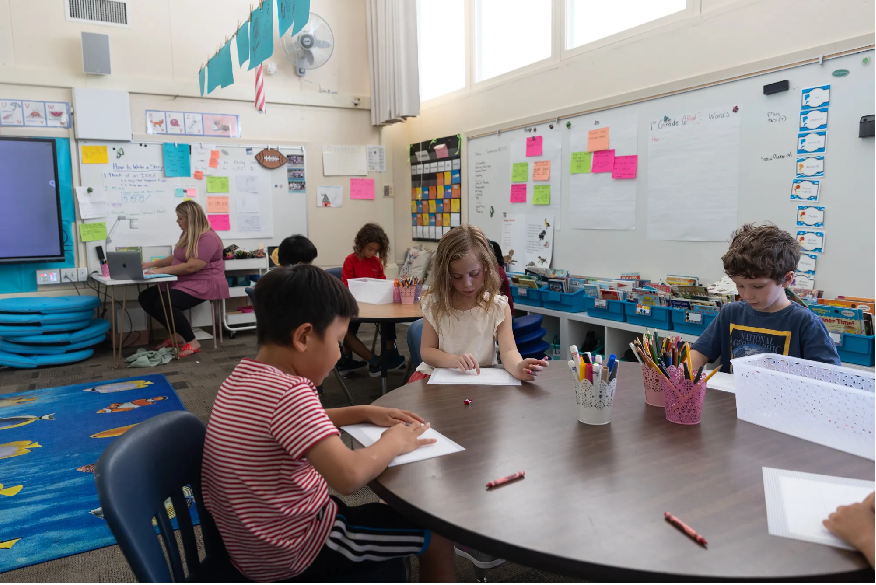

One-to-one education accelerates learning by tailoring every lesson to a student’s unique pace, learning style, and personal goals. Traditional classroom settings often force educators to teach to the middle, leaving struggling students behind and bright students disengaged. Personalized single-student instruction replaces rigid curriculum pacing with targeted mentorship, transforming academic anxiety into genuine self-assurance and measurable skill mastery. While personalized learning models are transforming traditional classrooms, Palo Altoone to one education gives students the dedicated attention they need to master complex concepts at their own speed.
Eliminating the Fear of Failure and Classroom Anxiety
Large group settings often cause students to internalize fear, worrying that asking questions or giving incorrect answers will invite judgment from peers. This social pressure creates hesitation, causing students to stay silent when they encounter difficult concepts rather than getting the clarification they need.
Read More: Online Education for Technical Trades and Why Many Say the SDI’s Cost Is Worth It
Personalized instruction eliminates the social pressure of a crowd. In a dedicated setting, mistaken answers become valuable teaching moments rather than sources of public embarrassment. Students freely express confusion, test out new ideas, and ask probing questions without feeling self-conscious. This safe environment dismantles academic anxiety, teaching students to view challenges as stepping stones toward mastery.
Customizing Instruction to Fit Individual Learning Profiles
Every mind processes information differently. Some students absorb abstract concepts through visual diagrams, others through hands-on practice, and many through structured verbal discussion. A single teacher managing twenty or thirty students simply cannot adapt instruction to match every individual learning style simultaneously.
Direct instruction gives tutors total flexibility to adapt their teaching methods on the fly. If a student struggles with a complex math concept explained algebraically, the instructor can immediately pivot to real-world visual analogies or interactive modeling. Tailoring the instructional approach directly to a student’s cognitive strengths makes learning intuitive, satisfying, and far more efficient.
Building Lasting Executive Function and Independent Study Habits
Academic success requires more than subject mastery; it demands strong executive function skills like time management, organized note-taking, and active study habits. Classroom environments frequently focus strictly on content delivery, leaving students to figure out study strategies entirely on their own.
Single-student sessions integrate study skills directly into every lesson. Tutors help students break down overwhelming long-term projects into manageable daily tasks, organize study materials, and build systematic test-preparation routines. Developing these core organizational skills gives students control over their academic workload, fostering independence that serves them well into higher education.
Transforming Disengaged Students into Active Self-Advocates
Sitting passively in a back row allows disengaged students to drift through school without actively participating in their own education. Over time, passive learning erodes curiosity, making education feel like a chore rather than an empowering pursuit.
Direct instruction requires full involvement, making passive sitting impossible. Tutors engage students in active discussions, asking open-ended questions that require critical thinking rather than simple memorization. As students learn to voice their thoughts, explain their reasoning, and articulate where they need help, they transform into active, proactive self-advocates in their education.
Fostering Meaningful Mentorship and Personal Accountability
Strong working relationships between instructors and students form the foundation of effective learning. When a student knows their teacher genuinely understands their strengths, interests, and struggles, their motivation increases dramatically.
Read More: How to Select the Right Management Programme Based on Your Career Goals
Single-student learning environments cultivate deep mentorship grounded in mutual respect and accountability. Tutors connect academic material to the student’s personal interests, making complex topics relevant and engaging. This close dynamic creates a supportive environment where students take ownership of their progress, work harder, and take pride in reaching their goals.
Conclusion
One-to-one education offers a transformative approach to learning that builds both academic mastery and lasting personal confidence. Tailoring instruction to individual learning styles, providing immediate feedback, and creating a safe space free from peer pressure helps students overcome anxiety and embrace intellectual challenges. The focused mentorship and study habits developed in single-student learning environments equip students with the skills, resilience, and self-assurance needed to excel academically and navigate future educational pursuits with complete independence.